

A Blind Stitch Sewing Machine is an essential tool in garment manufacturing and tailoring,designed to create nearly invisible hems that deliver a clean,professional finish.Whether you are working in a fashion studio,a tailoring shop,or a large-scale factory,understanding what fabrics can be sewn with a Blind Stitch Machine helps you achieve better quality and efficiency.
The primary function of a Blind Hem Sewing Machine is to stitch hems in a way that the thread is barely visible on the outside of the fabric.This makes it ideal for garments where appearance matters,such as formal wear,uniforms,and high-end apparel.However,not all fabrics behave the same when processed with a Blind Hem Machine,so choosing the right material is crucial.
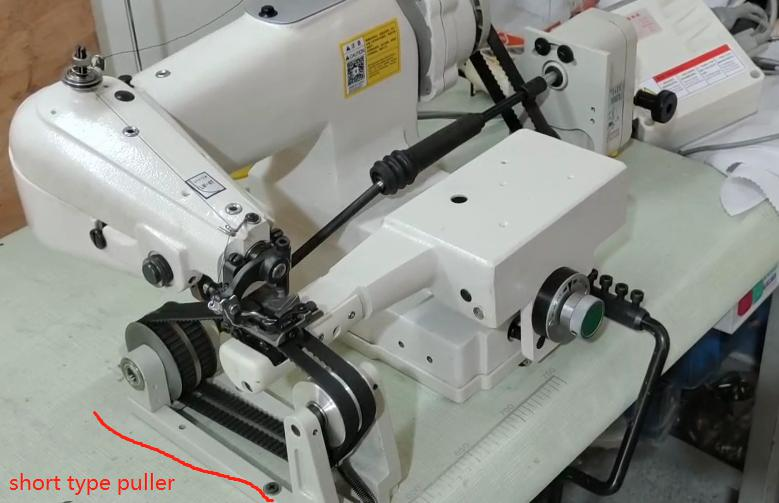
Medium-weight woven fabrics are among the most suitable materials for a Industrial Blind Stitch Sewing Machine.Fabrics like cotton,polyester blends,wool,and linen provide the perfect balance of structure and flexibility.These materials allow the needle to catch just a small portion of the fabric,ensuring the stitch remains hidden while maintaining strong seam integrity.For example,dress pants,skirts,and jackets made from wool or polyester are commonly finished using a Blind Stitch Sewing Machine.
Lightweight fabrics can also be sewn using a Blind Stitch Machine,but they require careful adjustment.Materials such as chiffon,silk,and lightweight cotton may be more delicate,so operators must reduce tension and use finer needles to avoid damage.While a Blind Hem Sewing Machine can handle these fabrics,precision and experience are key to preventing puckering or visible stitches.
Heavyweight fabrics,including denim,tweed,and thick wool,are also compatible with an Industrial Blind Stitch Sewing Machine,especially models designed for heavy-duty use.These machines provide stronger penetration power and consistent stitching,making them suitable for hemming coats,jeans,and upholstery-related items.However,proper machine setup—such as adjusting stitch depth and pressure—is necessary to ensure smooth results.
Stretch and knit fabrics present a unique challenge.While some advanced Blind Hem Machine models can handle knits,the elasticity of these materials can lead to skipped stitches or uneven hems.In such cases,specialized settings or alternative hemming techniques may be required.Nevertheless,with the right expertise,a Blind Stitch Machine can still be used for certain knit garments,particularly when combined with stabilizers.
In addition to fabric type,fabric thickness,texture,and finish also influence performance.Smooth fabrics typically yield better invisible stitching results,while textured or loosely woven materials may require extra care.Testing on sample fabric before production is always recommended when using a Blind Stitch Sewing Machine.
In conclusion,a Blind Stitch Sewing Machine is highly versatile and can work with a wide range of fabrics—from lightweight silks to heavy wool—when properly adjusted.For manufacturers and tailors,selecting the right fabric and machine settings ensures clean,durable,and nearly invisible hems.Investing in a reliable Industrial Blind Stitch Sewing Machine not only improves product quality but also enhances production efficiency,making it an indispensable tool in modern garment production.