

In today’s fast-paced apparel manufacturing industry, efficiency, precision, and durability are crucial for success. One of the essential operations in garment production—especially in T-shirts, polo shirts, uniforms, and workwear—is bottom hemming. The bottom hem not only affects the appearance of the garment but also contributes significantly to its structure and durability. Selecting the right bottom hemming high-speed sewing machine is therefore critical for any industrial garment production line.
This article guides factory owners, production managers, and procurement teams on what to consider when investing in an industrial bottom hemming machine.
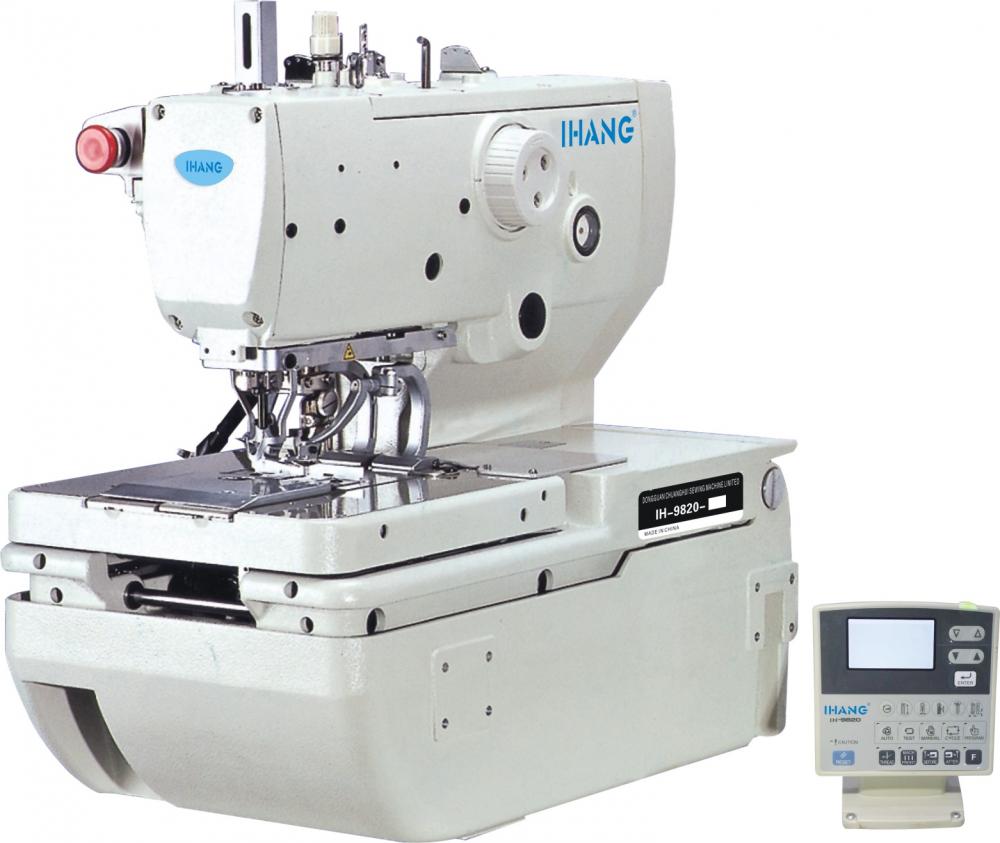
1. Define Your Fabric and Production Needs
Before choosing a machine, clearly identify the types of fabrics and garment styles your factory works with. Are you producing lightweight cotton shirts, heavy-duty workwear, or stretchable sportswear?
Different machines handle different materials better. For example:
-
Lightweight fabrics may require fine-tuned tension control and minimal fabric feed marks.
-
Heavy fabrics benefit from a powerful feed mechanism and durable components.
-
Stretch fabrics (like jersey or lycra) require differential feed systems to avoid puckering or distortion.
Ensure that the hemming machine is compatible with your most commonly used materials.
2. Speed and Throughput Capacity
High-speed sewing machines designed for bottom hemming can operate at 4,000 to 6,000 stitches per minute (SPM). However, speed must not compromise quality. Look for:
-
Consistent stitch quality at high speeds
-
Automatic thread trimming, back-tacking, and chain-off cutting to reduce manual intervention
-
Smooth fabric feeding system to prevent uneven hems
If your factory handles large-volume orders or fast fashion cycles, prioritizing machines with higher SPM and automated features can significantly boost productivity.
3. Automation Level and Operator Friendliness
Modern bottom hemming machines come with various levels of automation. Semi-automatic to fully automatic models help reduce labor dependency, ensure uniform quality, and save time.
Look for features such as:
-
Automatic folder guides
-
Programmable stitch length
-
Digital control panels
-
Error detection systems
-
Easy-to-adjust settings for hem width and tension
User-friendly machines also reduce training time and human error, especially useful for factories with rotating staff or high labor turnover.
4. Stitch Type and Finish Quality
Depending on your product line, you might need different stitch types—coverstitch, chain stitch, or flatlock. Make sure the selected machine supports:
-
The stitch type required by your product category
-
Uniform stitching without skipped stitches or tension variation
-
Clean finishing with minimal loose threads
Also, assess whether the machine can handle double-needle or triple-needle configurations if required.
5. Durability, Maintenance, and Service Support
Since bottom hemming machines are expected to run for long hours in industrial settings, durability and ease of maintenance are key factors. Choose machines with:
-
High-quality components (steel frame, ceramic bearings, reinforced needle bar)
-
Minimal lubrication requirement or sealed oil tanks to reduce oil stains
-
Modular design for easy part replacement
-
Availability of spare parts and prompt after-sales support
Regular maintenance routines should be simple, and local technical service should be accessible for quick issue resolution.
6. Customization and Compatibility with Existing Production Lines
Some advanced bottom hemming machines can be integrated into automated sewing lines, including robotic arms, conveyor systems, or multi-operation workstations.
Ensure your chosen machine can:
-
Be upgraded with additional modules
-
Sync with your ERP or production tracking software
-
Be easily moved, configured, or adapted based on your changing garment styles
7. Cost vs. Value
While it may be tempting to choose the lowest-cost option, industrial sewing machines should be seen as long-term investments. Consider:
-
Initial cost vs. long-term productivity gains
-
Energy efficiency
-
Downtime reduction
-
Labor cost savings
-
Potential for scaling up production
Sometimes a higher upfront investment in a branded, feature-rich model can offer a better total cost of ownership (TCO).
Conclusion
Choosing the right bottom hemming high-speed sewing machine for industrial garment production is not just a purchasing decision—it’s a strategic investment in your production capacity and product quality. By focusing on fabric compatibility, speed, automation, stitch quality, and long-term durability, you can optimize your garment production line for both efficiency and excellence.
Evaluate your specific needs, request a trial run when possible, and consult with trusted equipment suppliers or manufacturers. With the right machine, your production floor can achieve higher output, consistent quality, and lower operational costs—giving you a true competitive edge in the textile manufacturing industry.